Multi-day · from Marrakech
The Grand Tour
Ten days to join the Atlantic to the Sahara — Essaouira’s ramparts, the blue of Chefchaouen, Roman Volubilis, and Erg Chebbi in the middle of it.
Route
- Marrakech
- Essaouira
- Casablanca
- Chefchaouen
- Fes
- Erg Chebbi
- Todra gorge
- Ouarzazate
At a glance
- Length
- 10 days9 nights away
- From
- MarrakechReturns to the start
- Going
- moderateSome walking on uneven ground, early starts, a night under canvas.
- Group size
- to confirmIzil has not set a party size for this route yet.
- From
- on enquiryNo price has been set. Nothing on this page is a quotation — ask and we will send you one.
- Best season
- March – MayThe best of it. The Rif is green, the roses are out in the M’Gouna, and the desert has not turned yet.
Ten days is the shortest circuit that gets you the Atlantic, the Rif, the imperial cities and the Sahara without any of them being reduced to a photo stop. It is the route we would take if we had never seen the country.
Most people arrive in Morocco with two or three images in their head — a souk, a blue town, a dune — and no sense at all of how far apart they are. This route is built to close that gap. It runs anticlockwise from Marrakech: west to the Atlantic first, north up the coast, inland through the Rif to Chefchaouen, down to Fes, then the long diagonal across the Middle Atlas to the sand, and home through the gorges and the kasbah valleys.
The order matters more than the list. Going west first means you meet the ocean before the desert, which makes the desert land properly; coming back through the gorges means the last two days are the ones with the best light. Two nights each in Chefchaouen and Fes are deliberate — they are the two places on the route where a single night leaves you with nothing but a car park and a dinner.
It is a driving route, and there is no honest way to make it otherwise. What we can do is break the long days at things worth stopping for, and keep the two hardest ones — Fes to the sand, and the run back over the Tichka — at the two ends of the desert stretch rather than back to back.
10 days
The route, day by day
Day 1
West to the wind
Marrakech → Chichaoua → the argan country → Essaouira
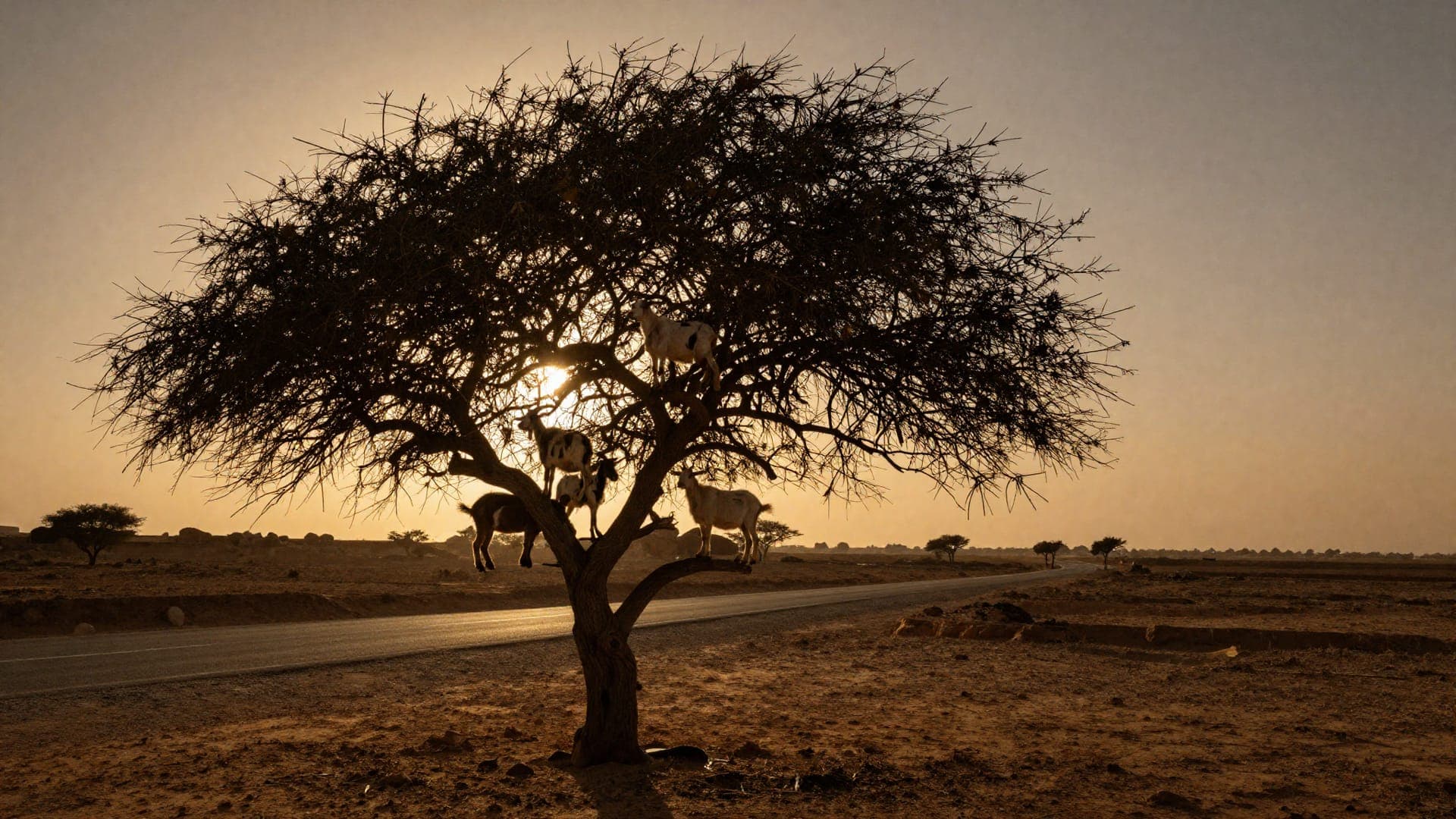
The shortest driving day of the ten, and a good one to start on. The plain west of Marrakech flattens out into argan country, where the goats climb the trees for the fruit and the roadside is set up entirely around people stopping to watch them do it. Essaouira arrives with a wind that does not stop between April and September: a walled fishing port with Portuguese ramparts, a working harbour that still smells like one, and a medina laid out on a grid, which after Marrakech feels like a kindness.
timings to confirm
NightEssaouira
Day 2
Up the coast
Essaouira → Safi → Oualidia → El Jadida → Casablanca
The Atlantic road, which almost nobody takes and everybody should. Safi for the potters’ quarter and the smell of the kilns, Oualidia for the lagoon and the oysters, El Jadida for the Portuguese cistern — a flooded stone chamber under the old town where the light comes through a single hole in the roof and lands on the water. Into Casablanca in the evening: a working city rather than a beautiful one, and the more interesting for it.
timings to confirm
NightCasablanca
Day 3
Two capitals, then the mountains
Casablanca → Rabat → Ouezzane → Chefchaouen
The Hassan II mosque first, built out over the water so that the faithful pray above the sea, and one of the very few in Morocco you can go inside. Then Rabat: the Kasbah of the Udayas, blue and white and quiet, and the Chellah, where storks nest on Roman and Merinid ruins in the same field. The afternoon turns inland and starts climbing, and the Rif is a genuine surprise after a day on the coast — green, wet, steep and completely unlike anywhere else on the route.
timings to confirm
NightChefchaouen
Day 4
The town that decided on a colour
Chefchaouen, on foot
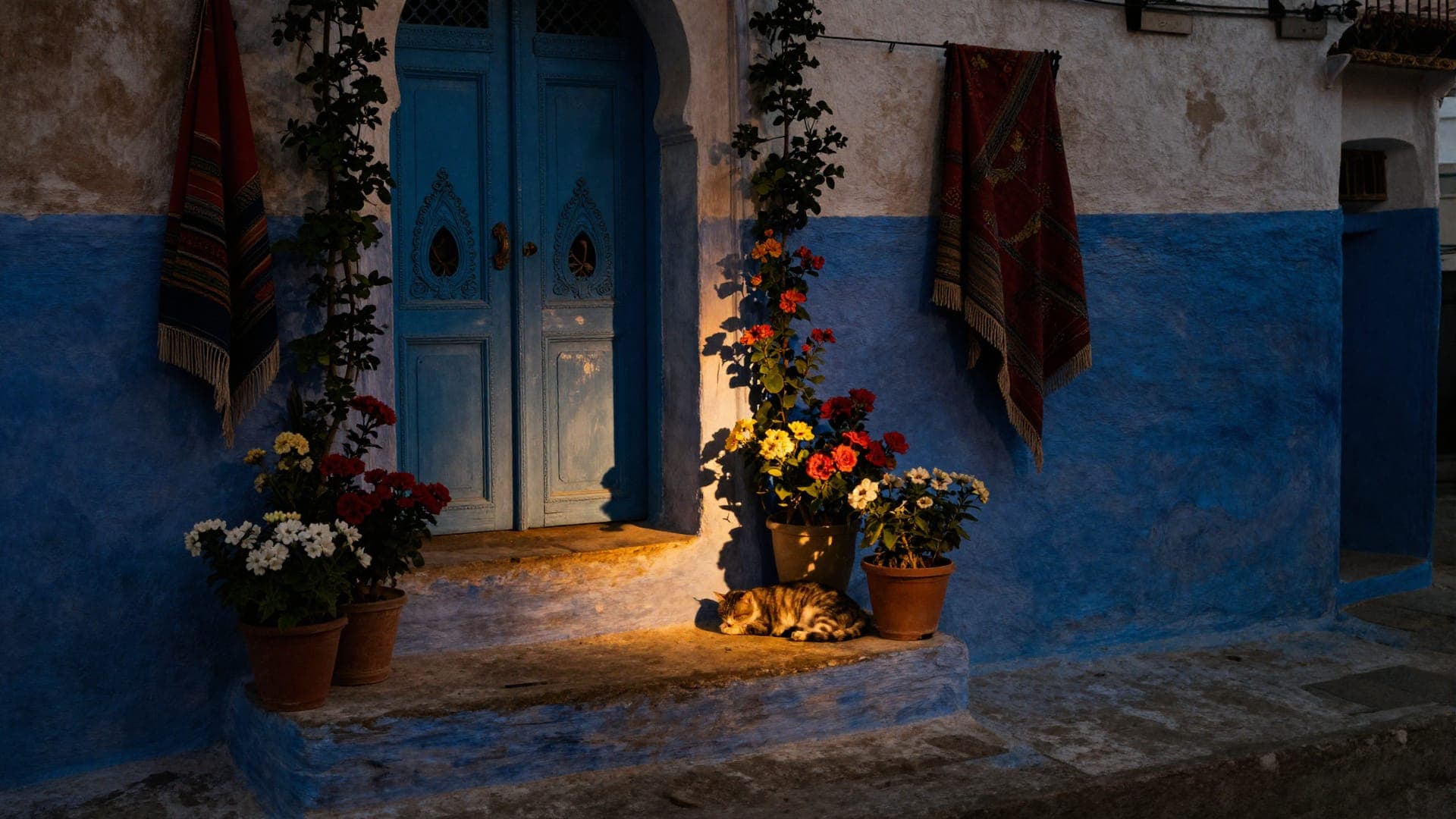
A day without the vehicle. Chefchaouen is small enough to walk out of in twenty minutes and complicated enough to get lost in for hours, and the blue is not a single blue — it is repainted constantly, in whatever the household could get, so it runs from near-white through to something close to indigo down a single staircase. Morning up to the Spanish mosque on the ridge for the view back over the roofs. Afternoon in the medina, or out to the pools and the natural stone arch at Akchour if you would rather walk than shop.
timings to confirm
NightChefchaouen
Day 5
Rome, briefly
Chefchaouen → Volubilis → Meknes → Fes
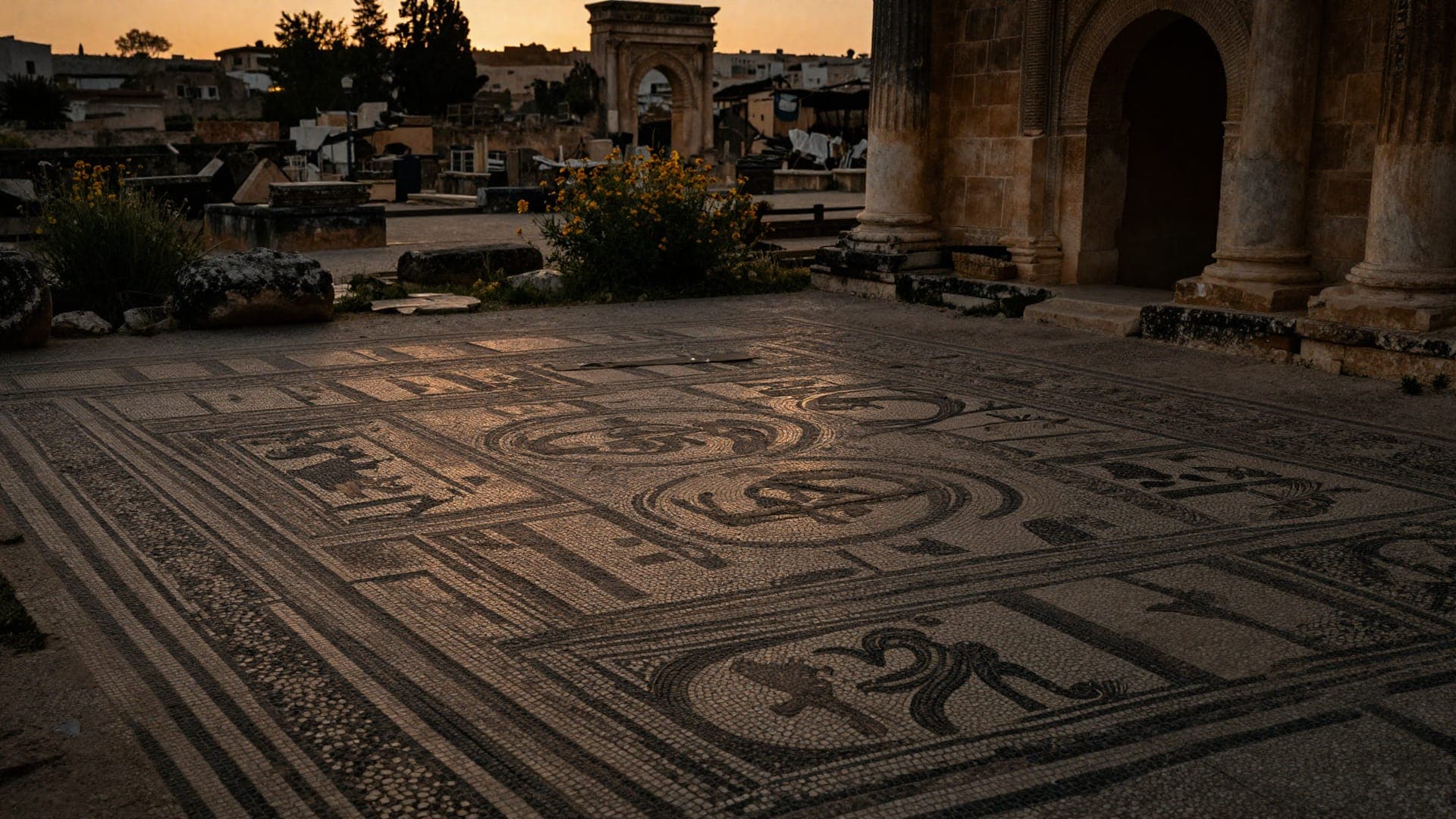
Down out of the Rif into wheat country. Volubilis was the western edge of the Roman empire and it is still, remarkably, laid out where it was left — a forum, a basilica, an arch, and mosaic floors sitting open under the sky with nothing between them and the weather. Meknes after lunch for the Bab Mansour gate and the scale of Moulay Ismail’s walls, then the short hop east to Fes, which you will want to arrive at with some energy left.
timings to confirm
NightFes
Day 6
Inside Fes
Fes el Bali, on foot
Fes el Bali is the largest car-free urban area in the world and it does not care whether you can navigate it. A local guide is not an upsell here, it is the difference between seeing the tanneries, the Attarine and Bou Inania madrasas, the Nejjarine fondouk and the Qarawiyyin — and spending the day walking in circles being sold things. Afternoon free. Most people go back in.
timings to confirm
NightFes
Day 7
Cedar to sand
Fes → Ifrane → Azrou → Midelt → the Ziz → Erfoud → Merzouga
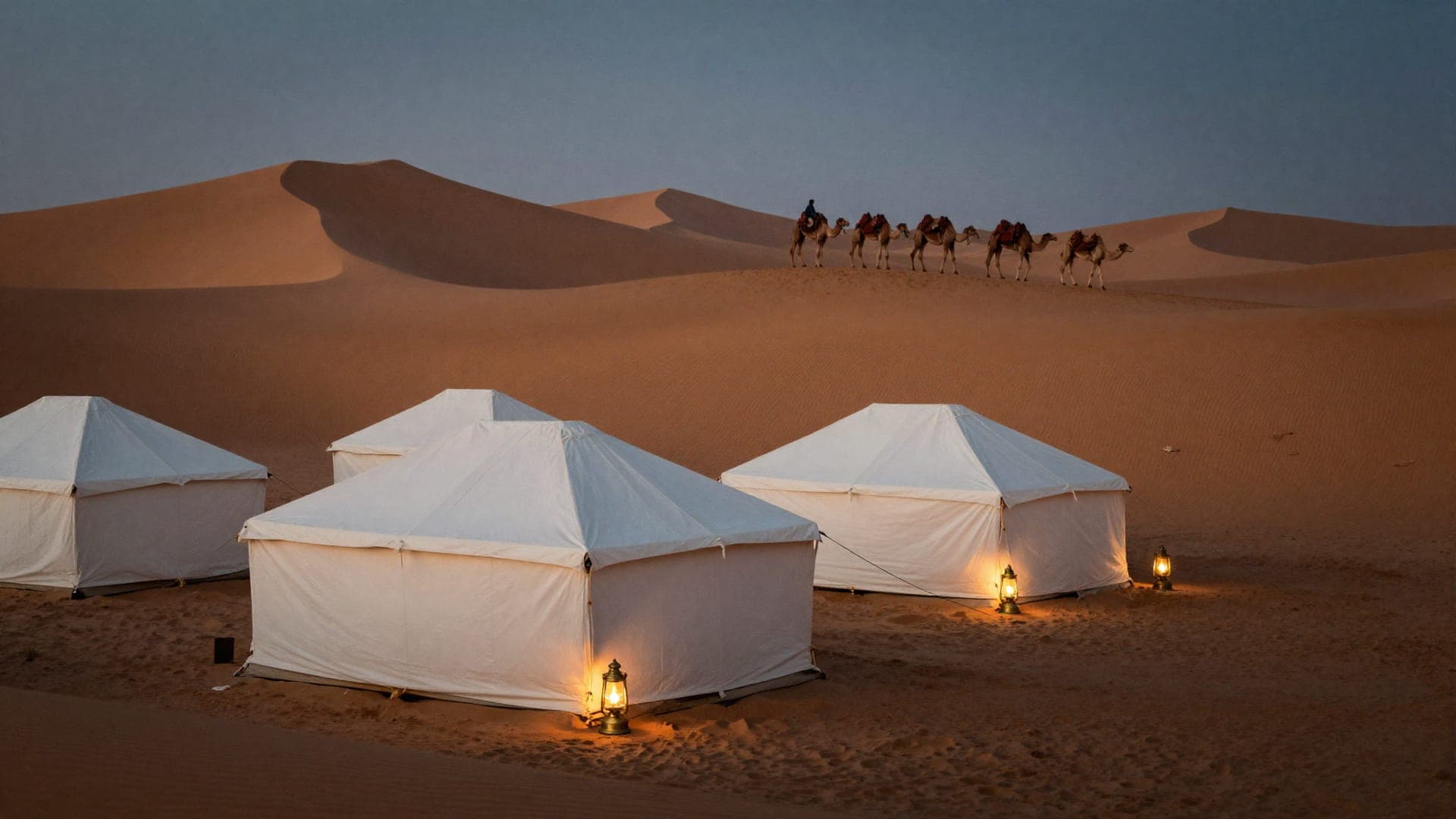
The big transition day, and the one that makes the route make sense. Ifrane is an alpine town with pitched roofs and it is in Morocco, which takes a moment. The cedar forest above Azrou has Barbary macaques in it. Then the plateau, Midelt, and the descent into the Ziz — a gorge that opens into a palmery running unbroken along the riverbed for as far as the road follows it, which is a long way. Erfoud, then the sand. Camels at the edge of the erg and a camp under canvas.
timings to confirm
NightErg Chebbi, under canvas
Day 8
The gorges
Erg Chebbi → Rissani → Tinejdad → Todra gorge → Dades valley
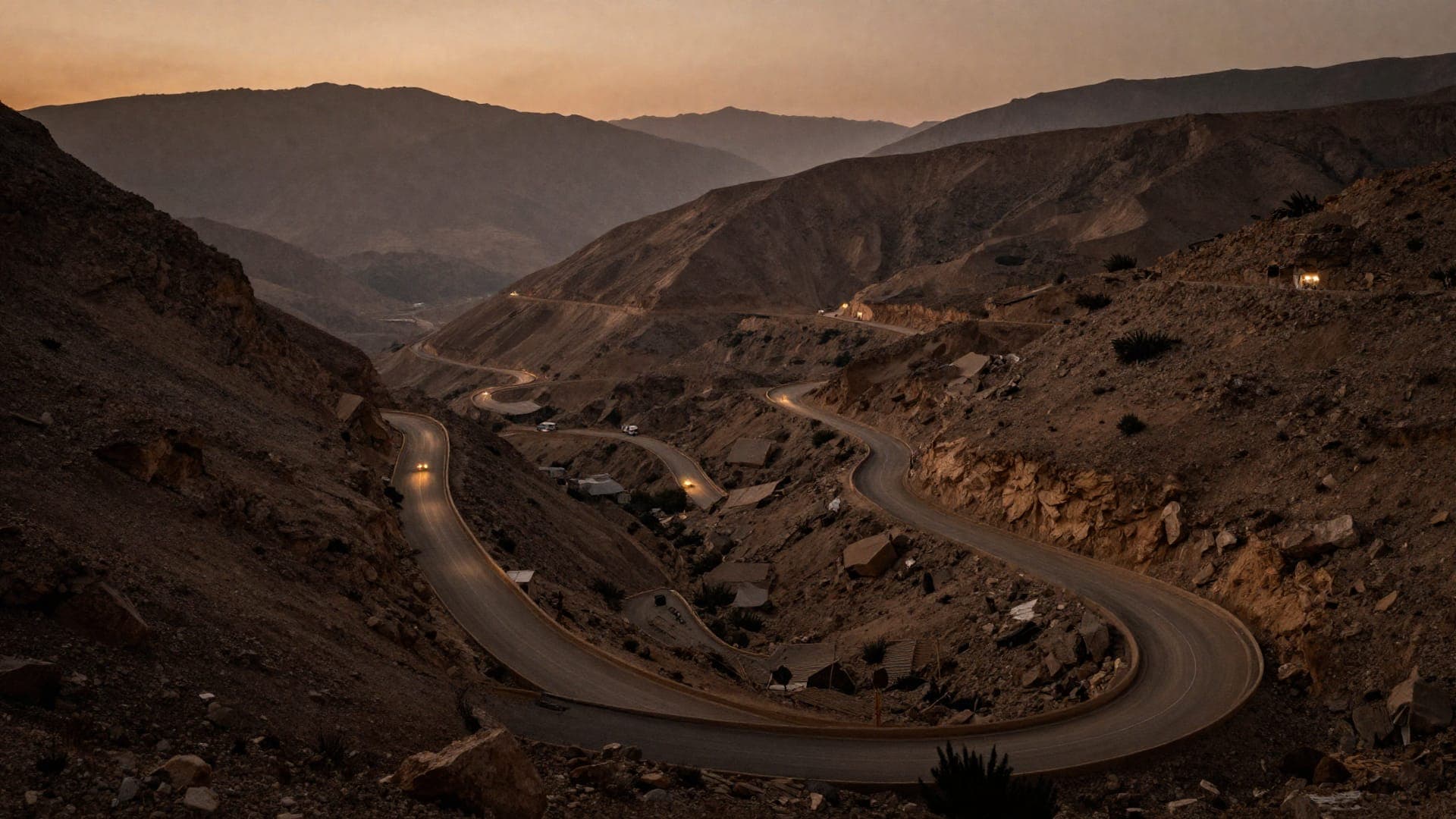
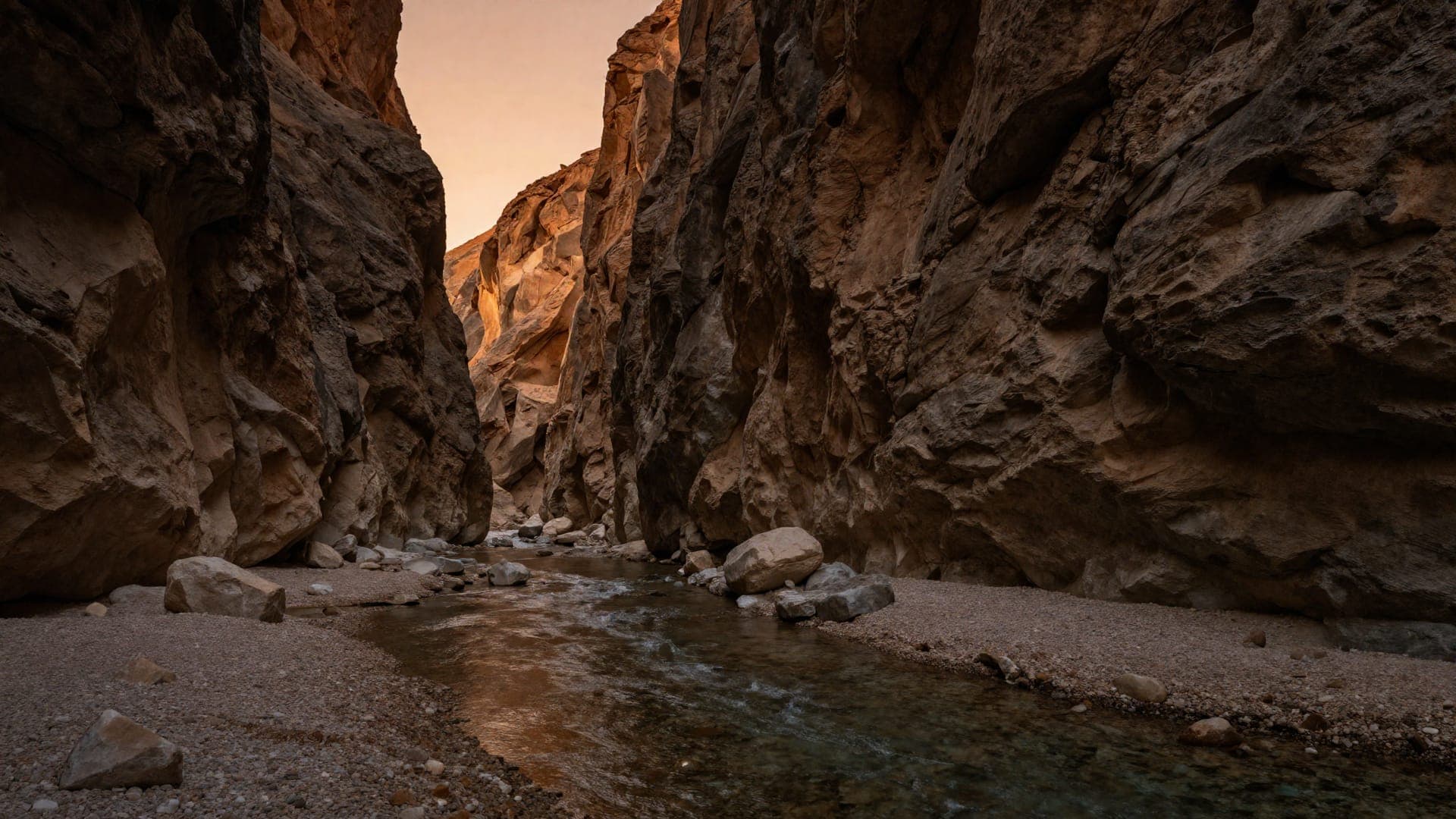
Sunrise on the dunes, then west. Rissani sits on the site of Sijilmassa, which was the northern terminus of the gold caravans and is now mostly gone, and the Monday and Thursday souk there is one of the least performed in the south. The Todra in the afternoon: sheer limestone, a shallow river running over gravel, and a road that has no business being in there. Overnight where the Dades narrows.
timings to confirm
NightDades valley
Day 9
Down the valley of the kasbahs
Dades valley → Kalaat M’Gouna → Skoura → Ouarzazate
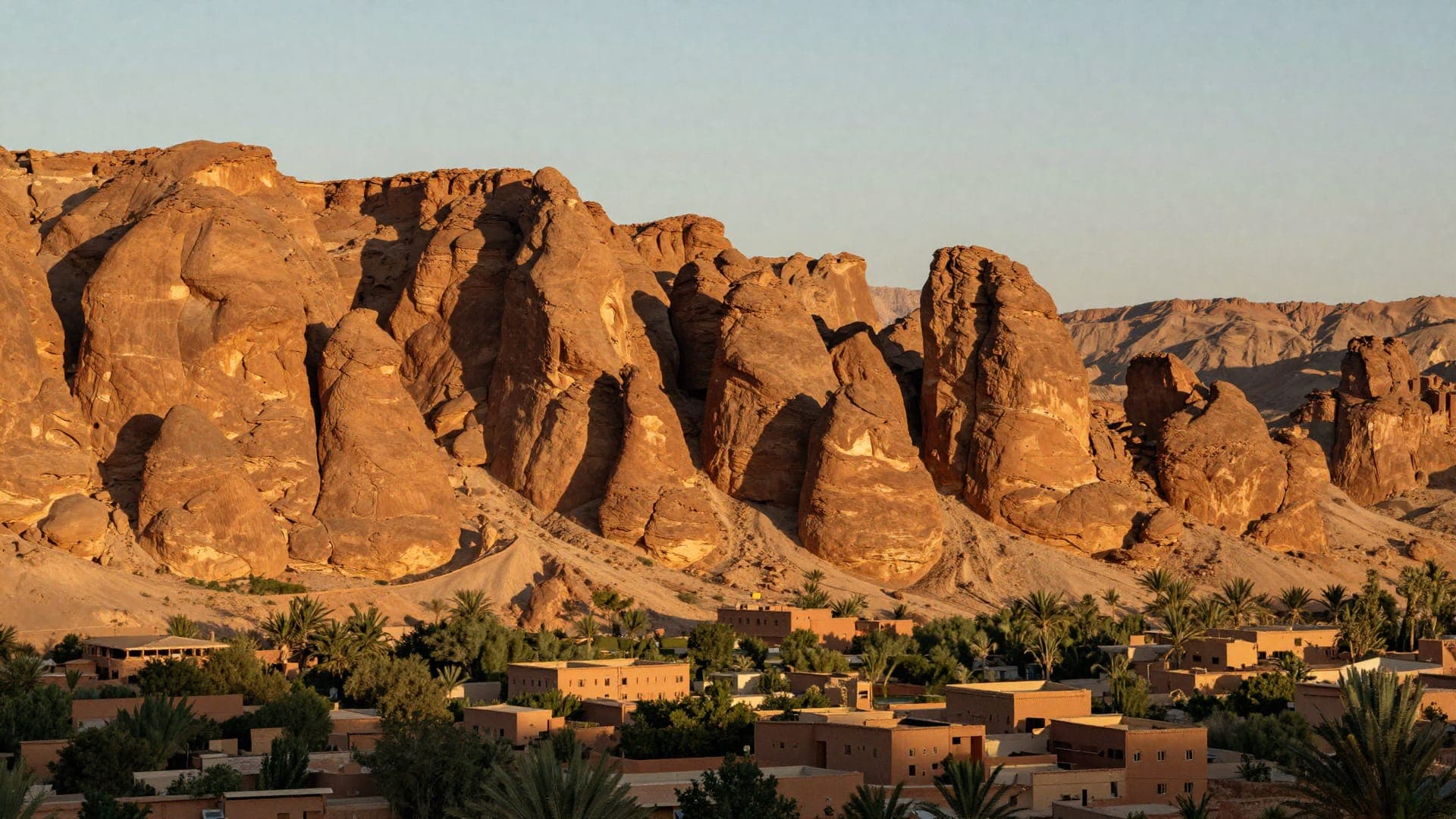
The Dades in the morning, under the smooth red rock formations that stand over the oasis like a set of knuckles. Kalaat M’Gouna is rose country — distilled and sold everywhere, and in May the whole valley smells of it. Skoura is a palm oasis with kasbahs still standing inside it, several of them lived in. Ouarzazate for the night: film studios, a Foreign Legion history, and the Taourirt kasbah at the end of the main street.
timings to confirm
NightOuarzazate
Day 10 · last day
Back over the top
Ouarzazate → Aït Benhaddou → Tizi n’Tichka → Marrakech
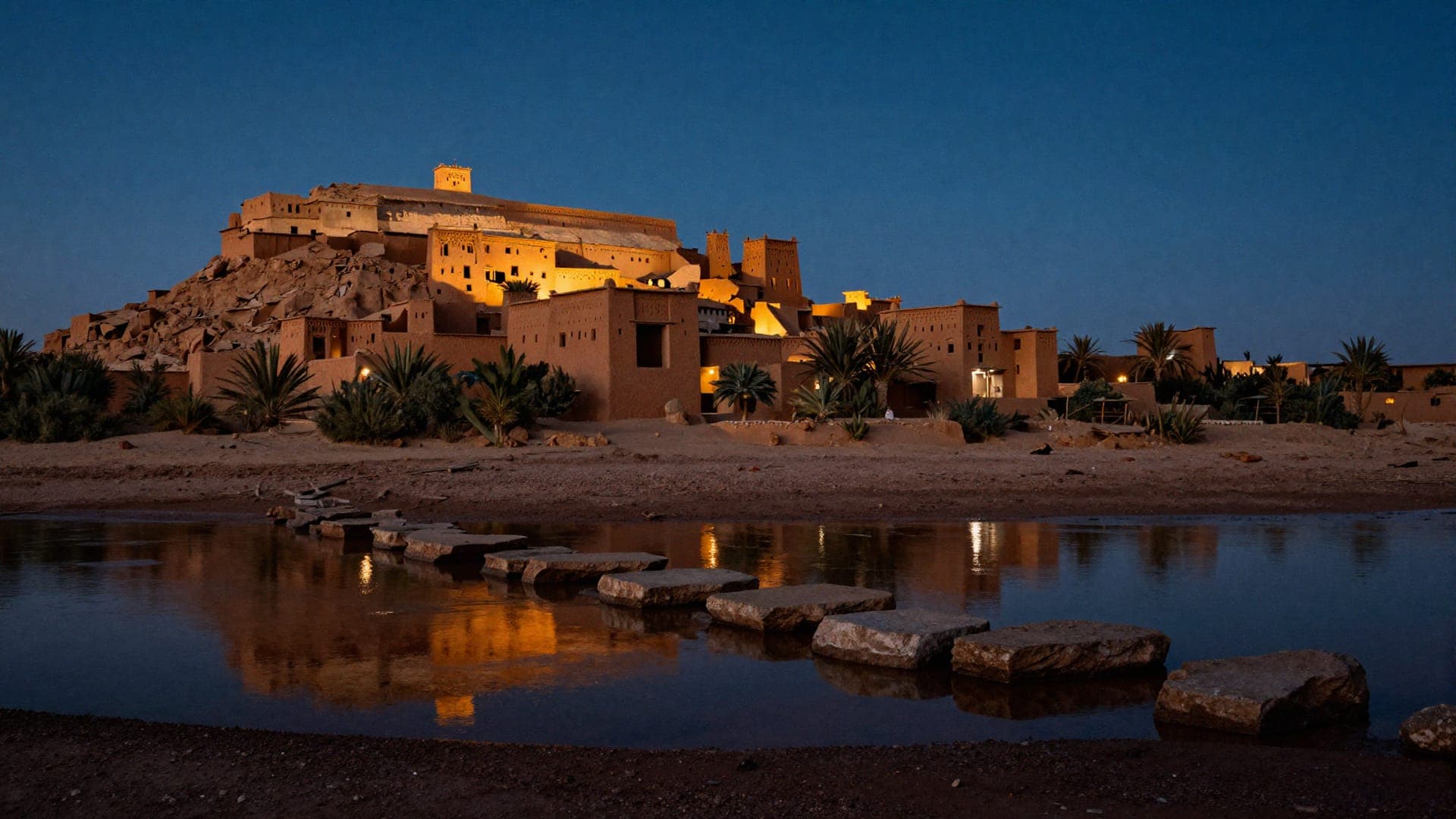
Aït Benhaddou first thing, before the coaches — the stepped ksar on its bluff above the Ounila, with the river crossed on stepping stones and the climb up through the empty houses to the agadir at the top. Then the Tichka, the last mountain of the trip, and down the far side into the Haouz. Marrakech by mid-afternoon, which leaves the evening for the one thing the route did not have room for at the start: the city itself.
timings to confirm
No overnight — the route ends today.
Covered
What is included
- Private vehicle with fuel and tolls for all ten days, and one driver-guide throughout
- Nine nights’ accommodation, including one under canvas at Erg Chebbi
- Breakfast daily, plus dinner and breakfast at the desert camp
- The camel crossing into the erg and back out at dawn
- Local guides in Fes and Chefchaouen, where they earn their fee twice over
- Airport pick-up and drop-off at Marrakech
Not covered
What is not
- Flights and travel insurance
- Lunches, dinners outside the camp, and drinks
- Site entry — Hassan II, Volubilis, the Fes madrasas, Aït Benhaddou and the rest
- Tips for the driver, the local guides and the camp crew
- Anything not listed above
When
Best season
- March – May
- The best of it. The Rif is green, the roses are out in the M’Gouna, and the desert has not turned yet.
- September – November
- Equally good and slightly quieter. Warm on the coast, cold at the camp by November.
- December – February
- Clear and cold. Snow can close the Tichka for a day at a time — we route around it when it happens, and we would rather tell you that now.
- June – August
- The coast is perfect and the interior is not. Fes and the desert are hard work in high summer; the itinerary shifts earlier and the days get longer.
Before you book
Good to know
- Ten days, nine beds, one vehicle. The two longest driving days are day three and day seven, and they are deliberately not consecutive.
- Two nights each in Chefchaouen and Fes are not padding. Both are places where one night gets you a car park and a dinner.
- The circuit runs clockwise just as well, and starting from Fes or Casablanca costs nothing extra — say where you are landing when you enquire.
- Snow on the Tizi n’Tichka is a real possibility between December and February. There is a longer way round through Agadir and we know it.
- The camp has no mains power and no reliable signal. Everywhere else on the route does.
Next
Ask about this route
Dates, party size and what you actually want out of it. Izil will come back with a price and, if the route needs changing to suit you, will say so.
Same gateway